Future Cities: Biophilic Urban Design
- Maria Bogatinovska
- Aug 26
- 4 min read

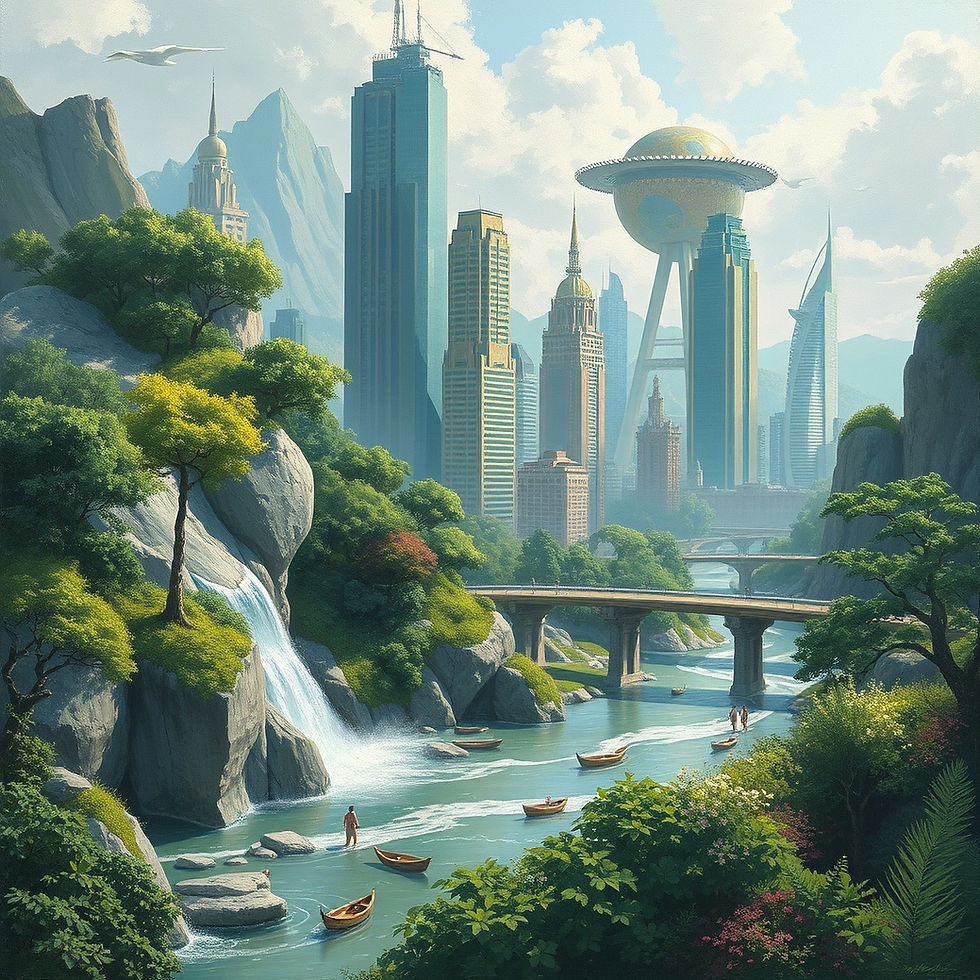
Envisioning a New Biophilic Urban Experience
Imagine stepping out of your apartment and instead of being greeted by the cacophony of car horns, you hear the soothing sounds of birdsong. Picture towering skyscrapers enveloped in lush greenery, streets that remain cool during the summer heat, and a clean, vibrant river flowing through the heart of the city. This isn’t a scene from a science fiction novel; it is the blueprint for the cities of our future.
Today, I invite you to embark on a journey exploring how cities can harmoniously blend nature and urban life, and why this transformation is not only possible but essential for our survival.
The Current Urban Landscape
Cities are expanding at an unprecedented rate, but this growth often comes at the expense of our natural environments. Roads replace forests, concrete covers wetlands, and we find ourselves surrounded by lifeless concrete deserts rather than vibrant living spaces. However, there is good news: a movement is emerging. Researchers, architects, and city leaders are asking the pivotal question: What if our cities could reconnect with nature instead of replacing it? The answer to this question could revolutionize the way billions of us live.
Frameworks for Sustainable Urban Planning
To lay the groundwork for this transformation, we can turn to the Urban Nature Futures Framework, a comprehensive body of research published in Science of the Total Environment. This framework provides various scenarios for integrating nature back into our urban environments. Another pivotal study in Urban Transformations highlights that urban planning is one of the most powerful tools available to guide cities toward genuine sustainability. The decisions we make today will determine whether future generations inherit barren concrete jungles or thriving ecological communities.
Real-World Examples of Nature-Integrated Design
We don’t have to wait to see these visions come to life; they are already manifesting across the globe. Consider Bosco Verticale in Milan, two residential towers adorned with nearly a thousand trees and thousands of shrubs and plants. These structures not only enhance the city’s aesthetics but also purify the air, provide shade, and create habitats for birds and insects.
Another inspiring example is CopenHill in Copenhagen, a power plant that doubles as a ski slope, hiking trail, and climbing wall. This innovative design demonstrates that infrastructure can be both practical and enjoyable. Then there’s Singapore, aptly known as the “City in a Garden.” From its iconic Supertree Grove to its verdant sky parks and tree-lined streets, Singapore exemplifies the benefits of government policies that actively promote biophilic design. Additionally, urban rewilding projects across Europe are transforming outdated grey infrastructures into vibrant green ecosystems.
Emerging Trends in Nature-Integrated Urban Design
What lies ahead in the realm of nature-integrated design? One exciting development is the concept of More-than-Human Futures, which envisions cities as habitats not only for humans but also for plants, animals, and entire ecosystems. Technology is also playing a significant role; modern computational tools can model entire cities, optimizing the placement of trees, green roofs, and parks to maximize ecological and social benefits. This approach transcends mere decoration; it represents a scientifically-driven integration of nature into urban planning.
The Impact of Urban Greenery
The benefits of integrating nature into urban environments are profound. Urban greenery can reduce surface temperatures by as much as seven to ten degrees Celsius, which can be the difference between a sweltering heatwave and a comfortable summer day. Cities rich in trees and water features enjoy improved air quality, enhanced mental health outcomes, and reduced flooding, thanks to designs inspired by the sponge city concept. For instance, studies in Ahmedabad, India, revealed that large parks combined with reflective roads successfully lowered average city temperatures by rethinking the design of streets and public spaces. Nature is not merely an aesthetic choice; it is essential infrastructure for our survival.
Practical Steps for Designers and Urban Planners
So, what actions can designers, planners, and developers take right now to promote this vision?
Embed Biophilic Principles: Incorporate greenery, natural light, and water features from the outset of the design process.
Focus on Multi-Functional Infrastructure: Draw inspiration from CopenHill, which serves as a power plant, recreational space, and community landmark.
Leverage Technology: Utilize computational models and planning frameworks to strategically place green elements for maximum impact.
Advocate for Policy Support and Community Engagement: Sustainable transformation occurs when community members and policymakers work in alignment.
Conclusion
The truth is that the cities of tomorrow need not push nature aside; they can embrace it. By doing so, they can become healthier, more resilient, and more vibrant. At Bogat Architecture and Design, this vision inspires every project we undertake. We are committed to research-driven, creative design that fosters a symbiotic relationship between people and nature.
If this vision resonates with you, I encourage you to share your thoughts in the comments below. Share this article with someone who cares about the future of our cities, and subscribe for more insights at the intersection of architecture, ecology, and innovation. Together, let’s imagine, design, and construct the future cities we all deserve.


Comments